

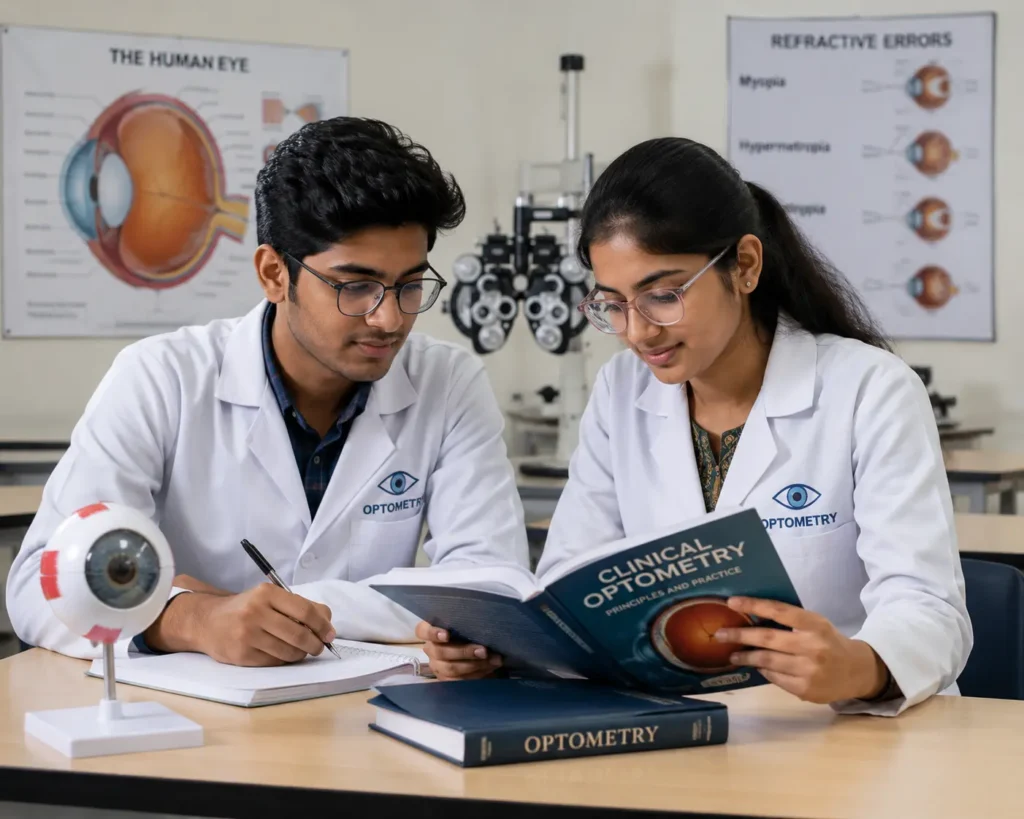
What Does an Optometrist Do?
Quick Answer
An optometrist is a primary eye care professional who examines vision, detects eye conditions, prescribes spectacles and contact lenses, manages many non-surgical eye disorders, and helps patients maintain lifelong eye health. They play an essential role in preventing vision loss through early detection and regular eye examinations.
Who is an Optometrist?
An optometrist is an Allied Health Sciences professional trained to evaluate visual function and eye health. They provide comprehensive eye examinations, prescribe corrective lenses, detect common eye diseases, and refer patients to ophthalmologists when surgical treatment is needed.
Optometrists bridge the gap between preventive eye care and specialized medical treatment, making them an integral part of modern healthcare systems.
What Does an Optometrist Do Every Day?
An optometrist’s daily responsibilities vary depending on their workplace but typically include conducting comprehensive eye examinations, assessing visual acuity, diagnosing refractive errors such as myopia, hyperopia, astigmatism, and presbyopia, prescribing spectacles and contact lenses, detecting conditions like glaucoma, cataracts, diabetic retinopathy, and macular degeneration, performing binocular vision assessments, managing dry eye syndrome, providing low vision rehabilitation, educating patients about eye health, and referring patients for surgical treatment when necessary.
A typical day may involve seeing children with vision problems, adults experiencing digital eye strain, elderly patients with age-related eye diseases, and contact lens users requiring follow-up care.
Why Are Optometrists Important?
Good vision directly impacts education, employment, productivity, and quality of life. Optometrists help detect vision problems before they become serious, allowing timely intervention that can prevent permanent visual impairment.
With increasing screen use and rising rates of diabetes and myopia, the demand for preventive eye care is growing rapidly.
Where Do Optometrists Work?
Graduates in optometry have diverse career opportunities in multi-specialty hospitals, eye hospitals, optical retail chains, private clinics, community health centres, vision screening programmes, schools, corporate occupational health departments, research institutions, medical device companies, contact lens manufacturers, and academic institutions. Some professionals also establish independent optometry practices after gaining experience.
Skills Required to Become an Optometrist
Successful optometrists combine scientific knowledge with interpersonal skills. Key competencies include attention to detail, clinical reasoning, communication skills, patient counselling, manual dexterity, problem-solving ability, empathy, precision in diagnostic procedures, technology proficiency, and a commitment to lifelong learning.
Technologies Used in Modern Optometry
Today’s optometrists work with advanced diagnostic equipment such as digital retinal cameras, Optical Coherence Tomography (OCT), corneal topography, auto refractors, visual field analysers, fundus imaging systems, non-contact tonometers, and AI-assisted retinal screening software. These technologies improve diagnostic accuracy and enable earlier detection of eye diseases.
Can Optometrists Perform Surgery?
No. Optometrists do not perform eye surgeries in India. Surgical procedures such as cataract surgery, LASIK, and retinal surgery are carried out by ophthalmologists.
However, optometrists are responsible for pre-operative assessments, post-operative care, vision rehabilitation, and long-term monitoring, making them vital members of the eye care team.
Career Opportunities After BSc Optometry
Graduates can pursue roles such as clinical optometrist, contact lens specialist, pediatric optometrist, low vision specialist, vision therapist, optical consultant, ophthalmic assistant, research associate, medical equipment specialist, clinical application specialist, and lecturer after postgraduate studies. The expanding healthcare sector offers opportunities in both public and private institutions.
Salary of an Optometrist
Salary varies depending on experience, location, and employer. In India, freshers typically earn between ₹2.5–4.5 lakh per year, mid-level professionals earn ₹5–8 lakh per year, and experienced specialists can earn ₹8 lakh or more annually. In GCC countries, qualified optometrists with relevant licensing and experience may earn significantly higher salaries along with additional benefits such as accommodation or travel allowances.
The future of optometry is promising due to factors such as ageing populations, rising diabetes prevalence, increasing screen exposure, growing awareness of preventive eye care, expansion of vision screening programmes, and advances in diagnostic technology. Demand is expected to increase across hospitals, clinics, retail eye care, and community health services.
Technology and AI Impact
Artificial intelligence is transforming eye care by assisting with the early detection of conditions such as diabetic retinopathy and glaucoma through image analysis. Rather than replacing optometrists, AI enhances clinical decision-making, allowing professionals to focus more on patient care, interpretation of results, and personalised treatment planning. Future optometrists will benefit from skills in digital diagnostics, tele-optometry, electronic health records, and AI-supported screening.
Kerala Perspective
Kerala has a well-developed healthcare ecosystem with a growing network of hospitals, specialty eye centres, and community health programmes. Increased public awareness of preventive healthcare, along with an ageing population, contributes to steady demand for eye care professionals. Students completing BSc Optometry in Kerala may find opportunities in hospitals, optical chains, diagnostic centres, and academic institutions, and the state’s reputation for quality healthcare education supports graduates seeking employment across India and abroad.
India Perspective
India has a significant burden of visual impairment and refractive errors, creating sustained demand for trained optometrists. Government initiatives, expanding healthcare infrastructure, and increasing access to eye care services continue to strengthen employment prospects.
International Opportunities
Countries in the Gulf Cooperation Council (GCC), Europe, Australia, and North America value qualified eye care professionals. Employment opportunities often depend on meeting local licensing and regulatory requirements, but the global need for vision care continues to grow. Graduates interested in international careers should research destination-specific registration processes and consider gaining clinical experience before applying.
Higher Studies
After BSc Optometry, graduates may pursue MSc Optometry, Master of Public Health (MPH), clinical research, vision science, hospital administration, healthcare management, fellowship programmes in specialty optometry, or doctoral research (PhD). Advanced qualifications can lead to careers in teaching, research, and specialised clinical practice.
Questions Parents Ask
Is Optometry a stable career?
Yes. Eye care is an essential healthcare service, and demand for qualified professionals remains consistent due to increasing vision-related conditions.
Will my child get a job after graduation?
Employment opportunities are available in hospitals, eye clinics, optical retail, community health programmes, and medical technology companies. Practical training and communication skills further improve employability.
Is the salary attractive?
Salary generally increases with experience, specialisation, and geographic location. International opportunities may offer higher compensation, subject to licensing requirements.
Can my child work abroad?
Many countries recruit optometrists, though graduates typically need to satisfy local licensing examinations or registration standards.
Is BSc Optometry a good investment?
For students interested in healthcare, patient interaction, and vision science, BSc Optometry can provide a rewarding career with opportunities for professional growth and lifelong learning.
Final Recommendation
Optometrists play a critical role in protecting and improving vision. They are often the first healthcare professionals to detect eye conditions that, if left untreated, could lead to permanent vision loss.
For students passionate about healthcare, technology, and patient care, BSc Optometry offers a balanced combination of scientific knowledge, clinical practice, and meaningful career opportunities. With growing demand in Kerala, across India, and internationally, optometry remains a relevant and future-oriented profession.
Students and parents exploring Allied Health Sciences programmes are encouraged to compare course curricula, clinical training opportunities, accreditation, faculty expertise, and career support before making an admission decision.


